
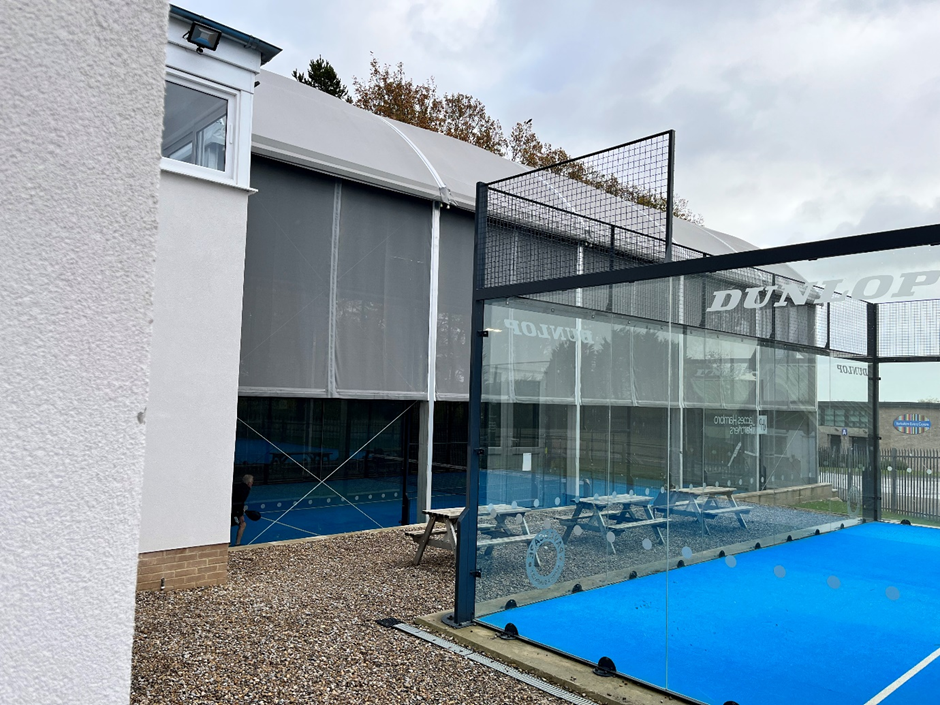
What is Padel Tennis?
Padel tennis, often just called padel, is a racquet sport that combines elements of tennis and squash. It’s played in doubles on an enclosed court that’s about a third the size of a tennis court, that the ball can bounce off, much like in squash.
Padel is extremely popular in Spain, Argentina, Sweden, and is growing quickly around the world, including in the UK, US, and Middle East.
Padel is considered easier to pick up for a novice compared with traditional tennis, and is typically a more social sport with a lot of rallies and teamwork.
Concerns Around Noise
Due to the reduced playing area and the enclosed nature of the court, it is possible to fit padel courts into smaller spaces than would typically be required for a tennis court. As the courts can be covered, it is also less weather dependent.
These factors, along with the increased popularity, mean that many developers are seeking to install courts in areas where traditional tennis courts wouldn’t be desirable nor practicable, often close to residential areas including central urban areas.
This reduced distance separation, the increased frequency of ball strikes on court surrounds and plastic racquets, and the social aspect leading to an increase in vocal noise all lead to an increased potential noise impact. As such, noise assessments are a critical aspect when considering the suitability of proposed court installations.
Limitations of Traditional Assessment Criteria
Typically, a noise impact assessment of a commercial activity would rely on the assessment methodology and guidance given in British Standard 4142: 2014 +A1: 2019 ‘Methods for rating and assessing industrial and commercial sound’.
However, Paragraph 1.3 of the Standard includes a list of elements that are not intended to be assessed, which includes ‘recreational activities’.
As such, it is necessary to find more applicable guidance or criteria to apply to the assessment of padel activities.
Typically Adopted Criteria
Sports pitches such as Multi Use Games Areas [MUGAs] are typically assessed according to the recommendations of Sport England document ‘Artificial Grass Pitches (AGP) Acoustics – Planning Implications’.
This document gives recommended methodologies for calculating the noise level due to AGP use at different receivers.
Although padel courts may not use artificial grass, the guidance of this document is considered the most relevant applicable to a proposed noise source of sports activity. The sports mentioned in the document are Football, Rugby and Hockey, sports which all include ball impacts, particularly Hockey.
Typically, the predicted level of noise generated by a proposed padel court would also be compared with the existing residual level of ambient noise, to ensure that the new noise source would not become dominant.
How Can Clement Acoustics Help?
At Clement Acoustics, we have undertaken a large number of padel court assessment, including for indoor and outdoor courts, associated with rural hotels, suburban tennis courts and city centre padel facilities.
We have a library of noise data to inform the expected level of noise due to courts, which are critical in informing noise impact assessment for proposed installation.
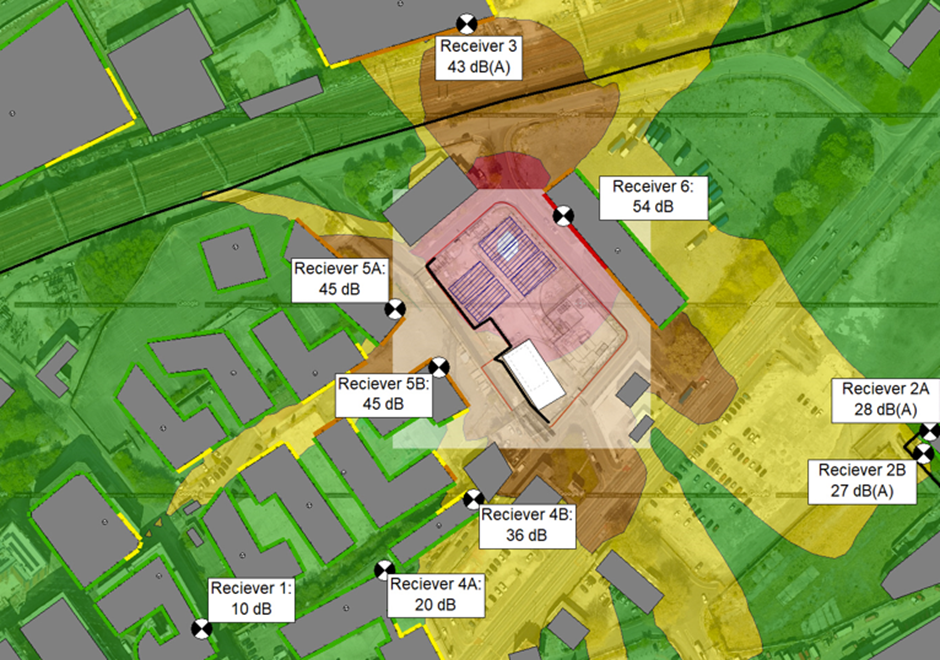
Through a combination of environmental noise surveys and 3D noise modelling, we can then undertake predictive noise impact assessments, to demonstrate how noise emissions from proposed padel courts can be controlled to an appropriate noise level, incorporating mitigation such as screening if found to be necessary.
Get in Touch
If you’re apart of a large infrastructure project, Clement Acoustics are experts in assisting with the noise and vibration design. Contact Clement Acoustics today to discuss your project.